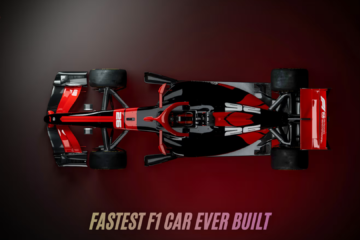
Formula 1 is known as the fastest sport in the world. In this F1 CAR SPEED Analysis, we will break down how fast F1 cars go, what makes them so quick, and why speed in Formula 1 is not just about pressing the gas pedal. Everything is explained in simple English, so even a 10-year-old can enjoy and understand it.
What Is Formula 1 Speed All About?
When people talk about Formula 1, the first thing they think about is speed. F1 cars are built only for racing. They are not like normal road cars.
In this F1 CAR SPEED Analysis, speed means:
- How fast can an F1 car go in a straight line
- How quickly can it speed up
- How well it can stay fast while turning
An F1 car can reach over 350 km/h (217 mph) on long straight tracks. That is faster than a plane during takeoff!
Top Speed of an F1 Car
How Fast Is an F1 Car at Full Speed?
The top speed of a modern F1 car is usually between:
- 330 km/h to 360 km/h
- That is 205 to 223 mph
Some famous tracks, like Monza in Italy, allow cars to reach their maximum speed because they have long straight roads.
Real-Life Example
Imagine driving on a highway at 100 km/h. An F1 car would pass you so fast, you might not even see its color.
Acceleration: Faster Than Supercars
0 to 100 km/h in Seconds
Acceleration is a big part of this F1 CAR SPEED Analysis.
An F1 car can go:
- 0 to 100 km/h in about 2.5 seconds
- 0 to 200 km/h in around 4 seconds
This is faster than most supercars like Ferrari or Lamborghini.
Why Is It So Fast?
- Very lightweight
- Powerful hybrid engine
- Amazing grip from racing tires
Why F1 Cars Can Go So Fast
1. Powerful Engine
F1 cars use 1.6-liter V6 turbo hybrid engines. They may sound small, but they produce over 1,000 horsepower.
2. Lightweight Design
Everything on an F1 car is made to be light:
- Carbon fiber body
- Minimal parts
- No extra comfort items
Lighter cars move faster.
3. Aerodynamics (Air Control)
Aerodynamics helps the car stick to the road.
Key parts include:
- Front wing
- Rear wing
- Floor design
These parts push the car down, so it can go fast without sliding.
Speed in Corners: Not Just Straight Lines
A big mistake people make in speed discussions is only looking at top speed.
In real racing:
- Corner speed matters more
- Fast turns win races
F1 cars can take corners at speeds that normal cars cannot even try.
Example
A normal car might slow to 60 km/h in a sharp turn.
An F1 car might take the same turn at 180 km/h.
That is skill, grip, and design working together.
How Tracks Affect F1 Car Speed
Not all tracks are the same.
Fast Tracks
- Monza (Italy)
- Spa-Francorchamps (Belgium)
These tracks focus on straight-line speed.
Slow and Technical Tracks
- Monaco
- Singapore
Here, top speed matters less. Control and cornering speed are more important.
This shows that F1 CAR SPEED Analysis depends on the track, too.
Is Speed Dangerous in Formula 1?
Speed is dangerous, but safety is very important in Formula 1.
Safety features include:
- Halo device to protect the driver’s head
- Strong crash structures
- Fireproof suits and helmets
Because of these, drivers can race at extreme speeds more safely than ever before.
Final Thoughts on F1 CAR SPEED Analysis
This F1 CAR SPEED Analysis shows that Formula 1 speed is not just about how fast a car goes in a straight line. It is about acceleration, cornering, design, and control.
To sum it up:
- F1 cars can exceed 350 km/h
- They accelerate faster than supercars
- They corner at unbelievable speeds
- Speed depends on both the car and the track
Formula 1 is the perfect mix of speed, science, and skill. That is why millions of fans around the world love watching it every year.


0 Comments